Adresse
Av du Casino 51
1820 Montreux
Horaire
lundi - vendredi : 09h - 18h
Adresse
Av du Casino 51
1820 Montreux
Horaire
lundi - vendredi : 09h - 18h
Fillings · inlays · root canal care
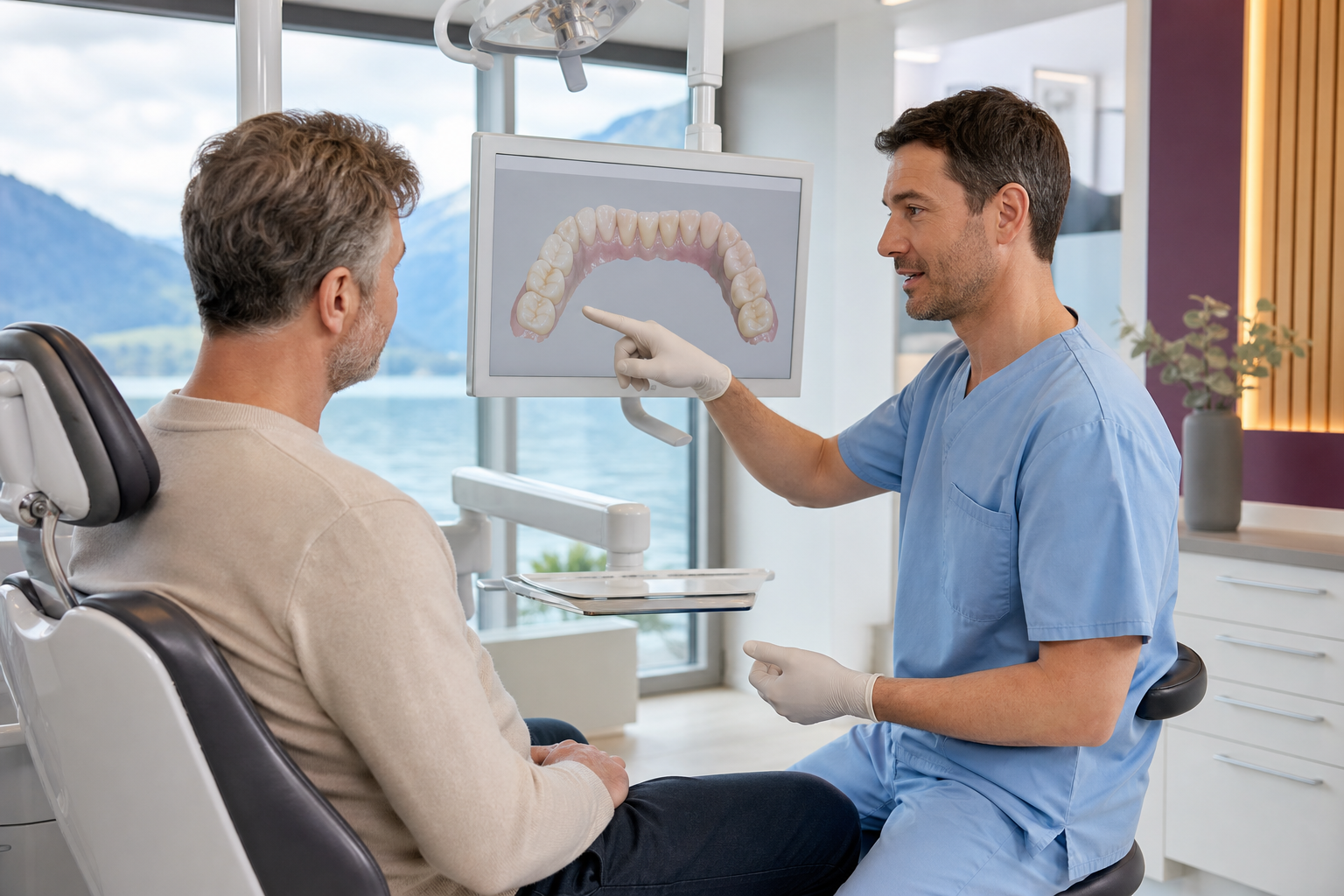
From small composite fillings to inlays, onlays and root canal care, treatment is selected according to how much sound tooth structure remains.
At a glance
A small lesion may be managed with prevention or a conservative filling after assessment.
Sound tissue is retained whenever clinically possible.
Material, longevity, limitations and cost are discussed before treatment.
Treatment options
A tooth-coloured direct restoration for many small to medium defects.
A laboratory-made restoration considered when more support is needed than a direct filling can provide.
Infected or irreversibly inflamed pulp is removed, the canals are cleaned and sealed, and the tooth is restored.
A heavily weakened tooth may need broader coverage after careful assessment.
The treatment depends on the depth, location and effect of the crack or break.
A custom guard may be advised when clenching or grinding contributes to wear or discomfort.
How treatment works
Symptoms, clinical findings and imaging are brought together.
Comfort and moisture control help treatment remain precise.
The damaged area is treated and rebuilt with the selected material.
Bite, comfort and home-care advice are checked before follow-up.
Fees & insurance
Costs vary with the number of surfaces, depth of the lesion, material, laboratory work and whether root canal treatment or a crown is required. A personalised estimate is provided before planned care. Routine fillings are generally not covered by Swiss compulsory health insurance; exceptions are limited by law.
Understand fees and DENTOTAR®FAQ
Not always. Very early non-cavitated lesions may sometimes be monitored and managed preventively. Once tooth structure has broken down, a restoration may be needed.
Local anaesthesia is used. Tenderness after treatment can occur, and the team explains what to expect and when to contact the practice.
A filling is shaped directly in the tooth. An onlay is made outside the mouth and bonded later, often when a larger area needs support.
No fixed lifespan can be promised. Size, material, bite forces, hygiene, diet and regular review all influence longevity.
Content: Cabinet Dentaire du Casino · Clinical review: Dr Pedro Elmano Matos, dentist · Updated: August 2026.
Sources: SSO — Treatment methods · SSO — DENTOTAR® · FOPH — Dental cover.
Related care
A clinical examination helps distinguish decay, cracks, wear and pulp-related pain before the most suitable treatment is chosen.