Adresse
Av du Casino 51
1820 Montreux
Horaire
lundi - vendredi : 09h - 18h
Adresse
Av du Casino 51
1820 Montreux
Horaire
lundi - vendredi : 09h - 18h
What happens during a dental check-up in Montreux, when to attend and how your dentist sets a personalised recall interval.
Short answer: A dental check-up helps detect tooth decay, gum inflammation, tooth wear and problems with fillings, crowns or dentures before they become more complex. There is no single ideal interval for everyone: your dentist recommends a personalised recall schedule based on your oral health and risk factors.
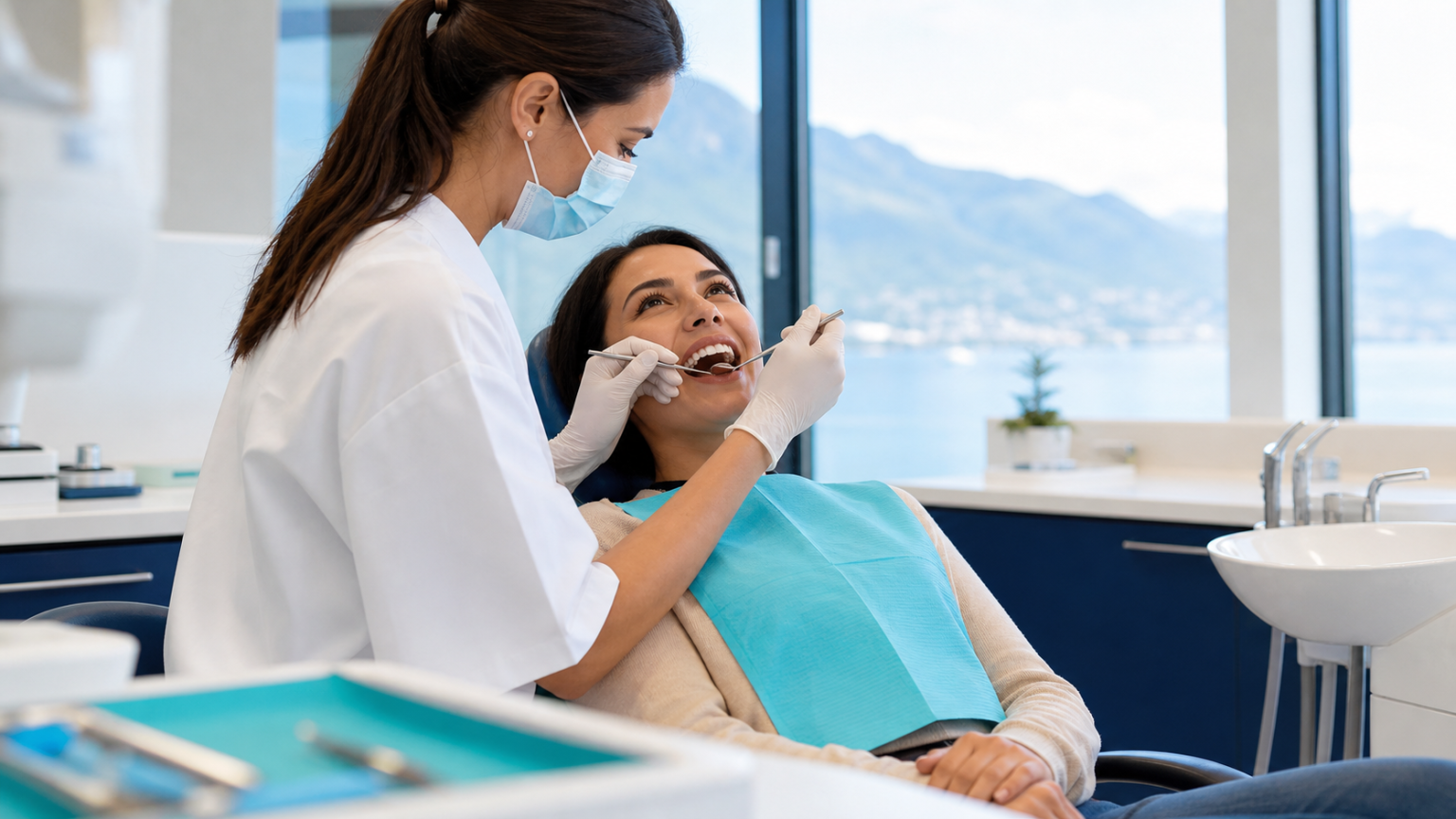
Your dentist first asks about pain, sensitivity, recent medical changes, medication and daily habits. The clinical examination then looks at your teeth, existing restorations, gums, oral tissues, bite and any crowns, bridges, implants or removable dentures.
No. Dental X-rays are taken only when the expected clinical benefit justifies them. The decision depends on your symptoms, examination findings, previous images, dental history and level of risk. The dentist selects the appropriate type and interval to obtain useful information while keeping exposure as low as reasonably achievable.
The familiar “every six months” rule is not appropriate for every patient. Your recall interval may be shorter or longer depending on previous decay, gum disease, smoking, dry mouth, orthodontic treatment, implants, medical conditions and the effectiveness of your home care.
Children also need an individual schedule based on age, tooth eruption, diet and cavity risk. At the end of your appointment, ask when your next examination should take place and why that interval suits you.
Early tooth decay and gum disease can progress without pain. A preventive check-up can identify subtle changes, compare them with earlier findings and allow simpler monitoring or treatment. It is also a useful opportunity to discuss sensitivity, cosmetic concerns, grinding, snoring or difficulties with cleaning.
For urgent symptoms, see our dental emergency guide for Montreux. A life-threatening emergency in Switzerland requires a call to 144.
The fee depends on the examination and any clinically justified tests. Routine private dental services in Switzerland are described using DENTOTAR®. If treatment is recommended, our team can explain the options and provide an estimate before care begins.
Swiss compulsory health insurance covers dental treatment only in limited situations defined by law. Supplementary policies vary in exclusions, limits and waiting periods, so check your own insurer’s written conditions before relying on reimbursement. You can also review our English guide to dental fees.
For a first visit, bring your medication list, relevant medical history and any recent dental X-rays available to you. Note the questions or symptoms you want to discuss. If dental visits make you anxious, tell us when booking so that we can plan a calm, step-by-step appointment; our dental anxiety guide explains the available approach.
Not automatically. A check-up is a diagnostic examination, while professional cleaning removes plaque and calculus. They may be scheduled during the same visit or separately according to your needs.
Yes. Many dental and gum problems begin without pain. Preventive reviews are designed to identify them early and establish a suitable monitoring interval.
Bring your medication list, relevant health information, previous X-rays if available and your insurance details if you want to check potential cover.
The duration depends on whether you are a new or returning patient and whether X-rays or additional assessments are needed. The clinic can give you an approximate appointment length when you book.
Would you like a preventive examination or a second opinion? Explore our dental care in Montreux or contact the clinic to arrange an appointment.
Related guides: how to choose a dentist in Montreux and professional dental cleaning in Montreux.
Author: Cabinet Dentaire du Casino editorial team. Medically reviewed by: Dr Pedro Elmano Matos, dentist.
This information is general and does not replace a clinical examination or personalised diagnosis.

