Adresse
Av du Casino 51
1820 Montreux
Horaire
lundi - vendredi : 09h - 18h
Adresse
Av du Casino 51
1820 Montreux
Horaire
lundi - vendredi : 09h - 18h
How dental cleaning works in Montreux, what it feels like, how long it takes and how often to book according to your individual oral health.
Short answer: A professional dental cleaning removes plaque and hardened calculus that brushing cannot eliminate. There is no single ideal frequency for everyone: the interval depends on gum health, decay risk, smoking, implants, restorations and daily oral hygiene.
Calculus is mineralised bacterial plaque. Once it hardens and adheres to the teeth, it cannot be removed with a toothbrush. Professional cleaning aims to remove these deposits above the gumline and, when indicated, from accessible areas below it.
This preventive care helps reduce gum inflammation and makes effective home care easier. It does not replace twice-daily brushing with fluoride toothpaste or interdental cleaning.
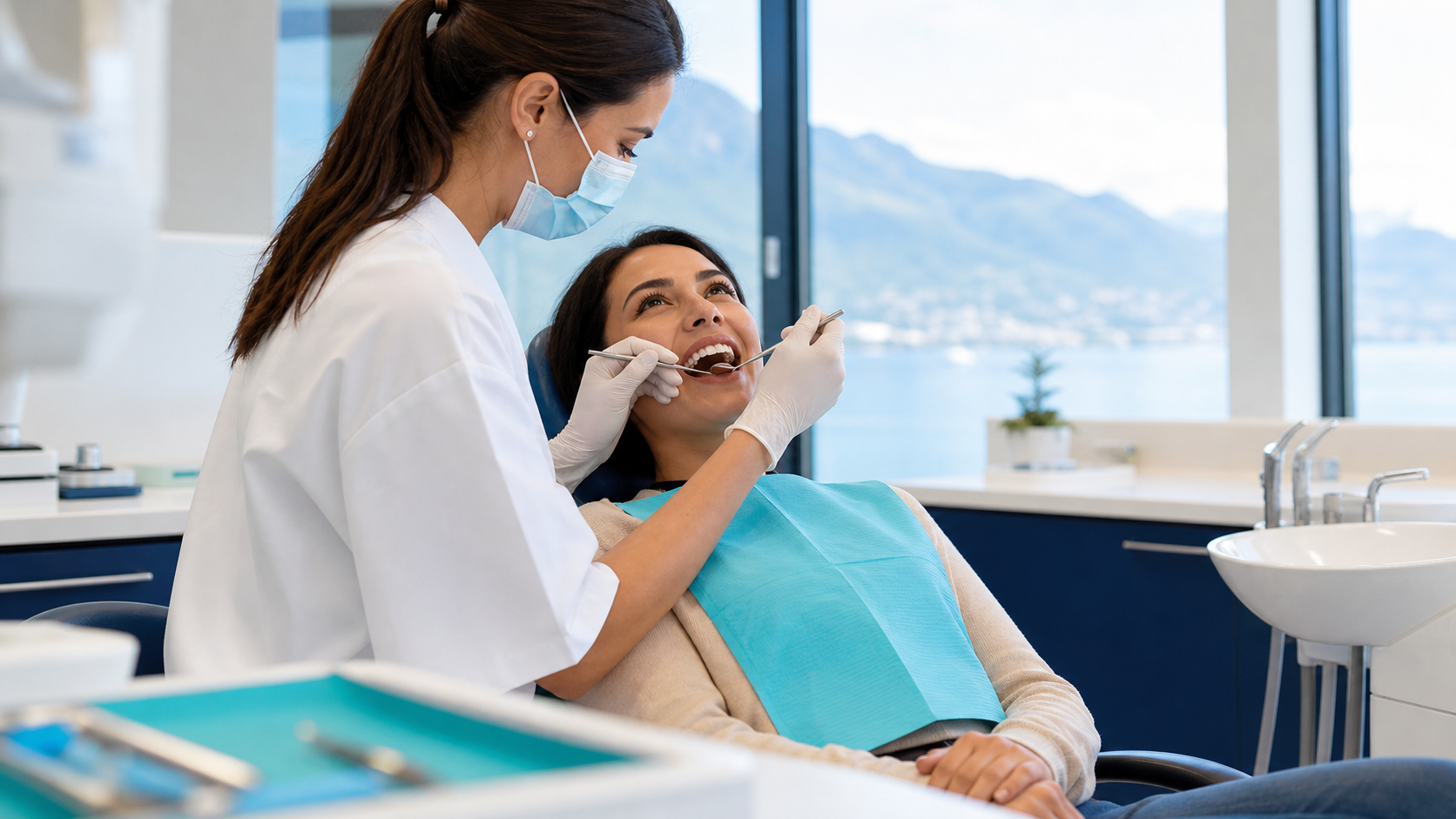
The appointment begins with a brief health-history review and an assessment of the teeth and gums. The clinician then adapts the instruments and pace to your needs. Ultrasonic scalers, hand instruments, air polishing and polishing may be combined.
Most patients mainly notice vibration, water and temporary sensitivity. Inflamed gums, exposed root surfaces or a large accumulation of calculus can make certain areas more sensitive.
Tell the clinician immediately if you feel discomfort. The pace, instruments and comfort measures can be adjusted. No responsible clinician can promise complete absence of sensitivity without first assessing your mouth.
There is no universal six-month rule. The recommended interval depends on plaque levels, gum bleeding, periodontal pocket depth, implants, restorations, smoking, general health and certain medicines. Someone with healthy gums and excellent home care may need a different schedule from a patient receiving periodontal maintenance.
After the examination, the dental team can recommend an individual interval and revise it as your oral health changes.
The duration depends on the amount of calculus, gum health and guidance required. A routine appointment often takes around 45 to 60 minutes, but only an assessment can provide a useful estimate.
Yes. The instruments and technique should be adapted to implant and restorative surfaces.
It removes deposits and some external staining. It does not change the natural internal colour of enamel in the way professional tooth whitening can.
Bleeding commonly reflects gum inflammation. Persistent or spontaneous bleeding should be assessed because it may be an early sign of periodontal disease.
Author: Cabinet Dentaire du Casino team. Medical review: Dr Pedro Elmano Matos, dentist.
This general information does not replace a clinical examination or personalised diagnosis.
Call 021 963 36 71 or use our appointment form. See also our guide to dental cleaning costs in Switzerland and our preventive care services.